Human impact →
Our health, society and global scaling
We're yet to understand the full impact and effects of artificial intelligence on us as people, but some of the more obvious areas of impact are emerging. It is particularly evident in our workplaces, where AI is driven by the commercial benefits, but there are also more social and psychological impacts, which we are learning to understand over time. Some effects may take years to emerge.


Job losses
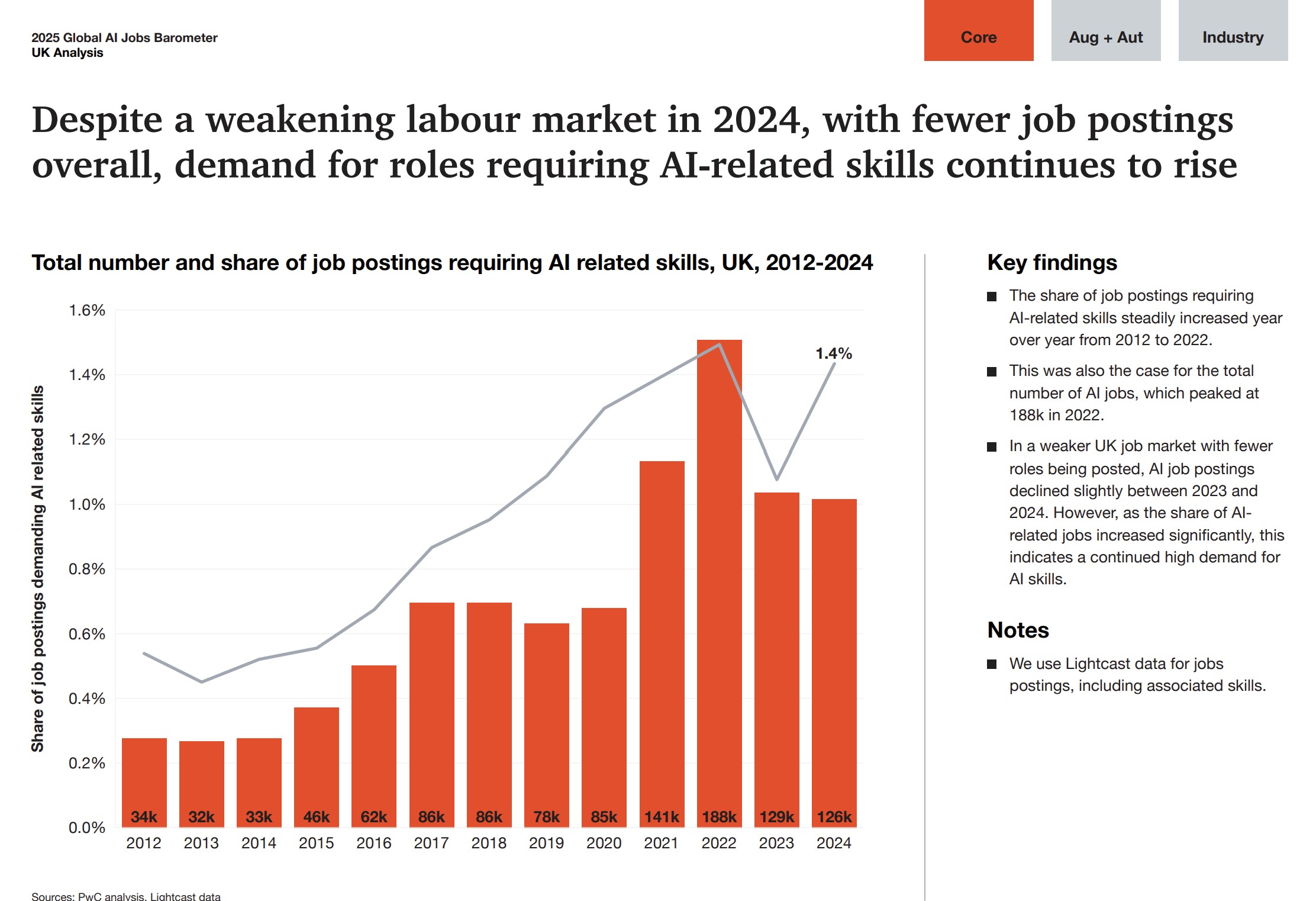
Increasingly, organisations are choosing to automate roles, rather than use human input. This leads to significant job losses, with some studies expecting an average of 1 in 6 jobs to be lost, with the majority being entry-level.
The loss of jobs creates not only stress and psychological challenges for the employee, but wider economic impacts; reducing consumer spending, increasing government strain (lower tax revenue, higher benefits), decreasing GDP, and causing significant, often long-term, income loss and financial hardship.
Key statistic (Source: Click here)
%
Net loss of jobs in the UK over the past 12 months
Worst-case scenario:
Organisations choose profit over people, replacing any viable role.
Wide-spread job replacements with automated systems, leading to economic decline, decreased GDP and human well-being experiencing significant challenges.
Best-case scenario:
Organisations replace only partial areas of their business practices with automated systems, and adapt existing employees roles to others within their company.
AI is used to enhance capabilities, decision-making and productivity.
Job insecurity & anxiety
Threatened by the potential replacement, or changes with their existing role, job insecurity and anxiety is increasing and effecting the well-being of people across the globe.
AI anxiety drives workers to hoard knowledge to protect jobs, leading to challenges within organisations, including increased levels of employee turnover, sick leave and support required.
In one report by CNBC, 42% of employees said they’re concerned about the technology’s impact on their jobs. Among individual contributors, 44% said they are “very or somewhat concerned,” compared to 38% of managers or higher.
Key statistic (Source: Click here)
%
Of workers are worried that artificial intelligence (AI) will lead to job losses
Worst-case scenario:
Existing employees assume their jobs are at risk, so hoard knowledge and reduce input. Higher turnover of staff, and increased costs in HR and team training.
Labour inequality amplifies, leading to entry-level jobs suffering the most, whilst director level roles increase momentum.
Best-case scenario:
Organisations introduce systems to reduce insecurity and anxiety, with specific AI introduction role targets. They except responsibility for their choices, react fairly and are accountable for AI system deployment.
Wealth inequality
On both a micro and macro level, wealth inequality is increasing with the introduction of AI systems. Within our organisations, and even between countries.
Within our organisations, entry-level roles are losing out to higher-levels, with the people at the top benefiting most. By choosing to introduce unfair levels of AI systems, human roles are being replaced because AI systems are cheaper.
According to the Center for Global Development, poorer less 'equipped' countries are losing out, with richer countries accelerating, leading to poorer countries being unable to compete, manage disruptions and pressurising traditional systems.
Key statistic (Source: Click here)
%
Bottom 50% (of UK households), who currently hold just 9% of nations wealth, may see their share shrink to 5%
Worst-case scenario:
The richest and most 'equipped' countries gain a monopoly, leading to poorer countries being unable to compete, leading to decreased GPD.
Best-case scenario:
The wealth inequality gap narrows, leading to a fair economy for businesses, leading to shared knowledge and wide-spread beneficiaries.
Cognitive decline
The effects of AI on cognitive development, can be a double-edged sword. It can boost learning by offering support and more efficient learning strategies, but it can also decrease due to 'offloading'. This is where traditional techniques of problem solving, are replaced by automated systems, and leads to skill decay, reduced effort levels and metacognitive laziness.
This report by The Harvard Gazette, and a recent study by MIT Media Lab study reported that “excessive reliance on AI-driven solutions” may contribute” to “cognitive atrophy” and shrinking of critical thinking abilities.
Key statistic (Source: Click here)
%
Reduction in brain activity (cognitive load) during tasks, when using Generative AI tools
Worst-case scenario:
People use AI systems for the majority of daily tasks, leading to wide-spread cognitive decline. Our reliance on technology leads to AI companies and developers to gain significant control.
Best-case scenario:
We learn to see AI systems as a tool, rather than a replacement, helping us to be more efficient with learning. Cognitive increase occurs.
Social & psychological impacts
Our over-reliance on artificial intelligence for interaction, could diminish interpersonal skills, emotional intelligence, and social cohesion.
By automating even the most basic human interactions, such as email responding, we are potentially removing opportunities to build basic social relationships. There is also, potentially, a reduction in trust, with the recipient being left feeling misdirected and devalued.
%
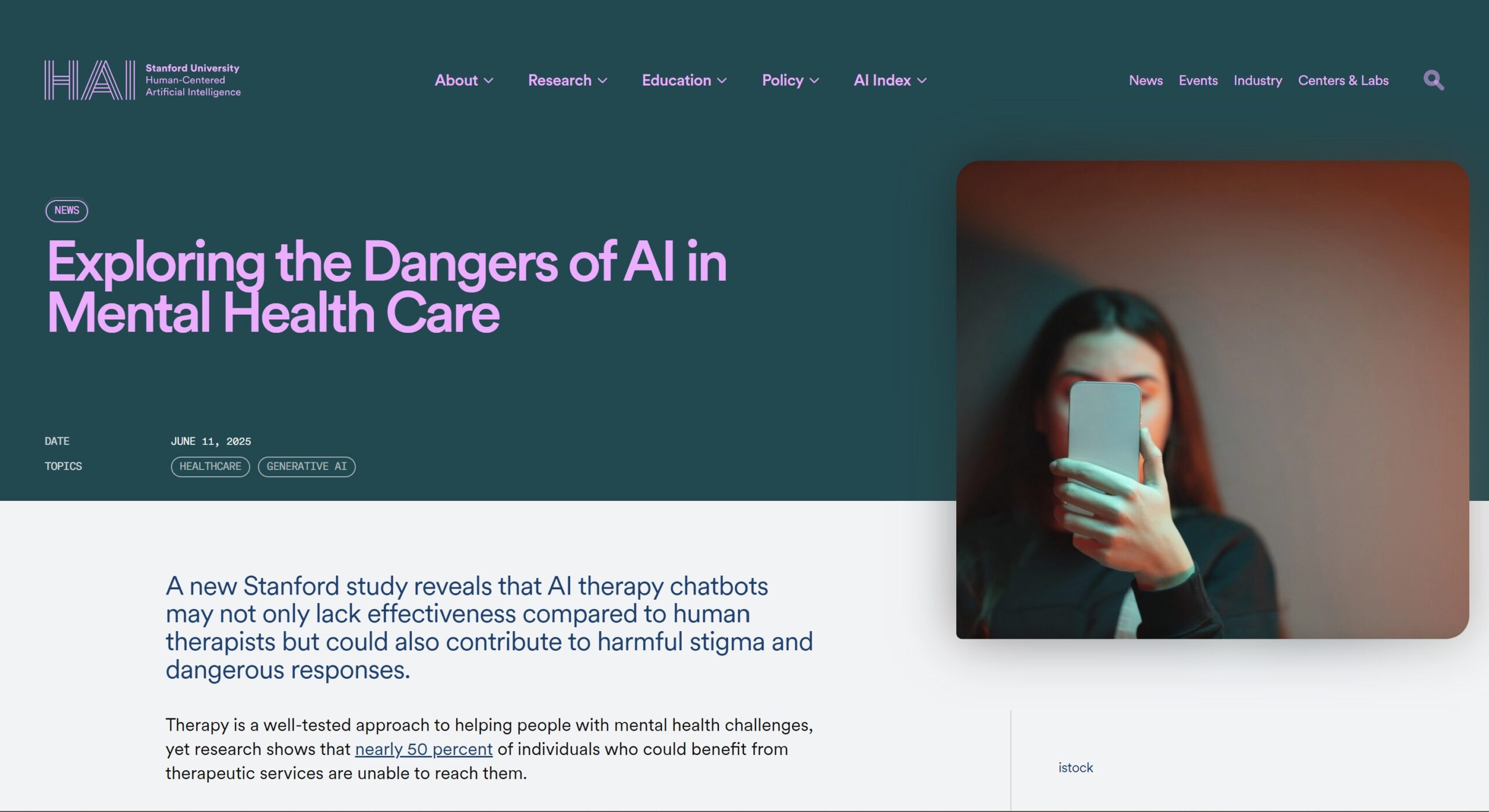
UK adults have used an AI chatbot to support their mental health or wellbeing, and 11% said they triggered or worsened symptoms
Worst-case scenario:
We rely heavily on automated AI systems to handle basic social experiences, leading to major reduction in emotional intelligence, interpersonal skills and trust.
Human well-being suffers as a psychological response.
Best-case scenario:
We use AI systems carefully and respectfully, leveraging them as efficiency tools to help improve society and human impact.
Environmental impact
To power AI platforms, massive data centres are being constructed that create huge environmental footprints. Some are as big as 'The China Telecom Inner Mongolia Information Park in Hohhot', China, which spans over 10.7 million square feet.
Often, these data centres are constructed in rural areas, which put already resource-stricken communities under further pressure - using limited electricity and water supplies.
Building a 2 kg data centre computer requires 800 kg of raw materials. As well, the microchips that power AI need rare earth elements, which are often mined in environmentally destructive ways.
Number of global data centres (compared to 500,000 in 2012)
Worst-case scenario:
Huge data centres are continuingly developed, causing huge environmental impact, whilst the components use rare materials that are mined in a destructive manner. More rural and less economically developed areas are exploited.
Best-case scenario:
Artificial intelligence is used to help tackle some of the world’s biggest environmental emergencies. Data centres are developed to run on 'clean' energy, where there is minimal impact on the environment and surrounded communities.
Summary
Within our organisations, it is important we protect human roles from complete automated replacement. Consumers should feel valued when interacting with businesses, and a significant part of that experience comes from dealing with people, not AI systems.
There are solutions for businesses that use AI to enhance capabilities, without sacrificing human experience.